
The short answer
How do you organise gaming for a group?
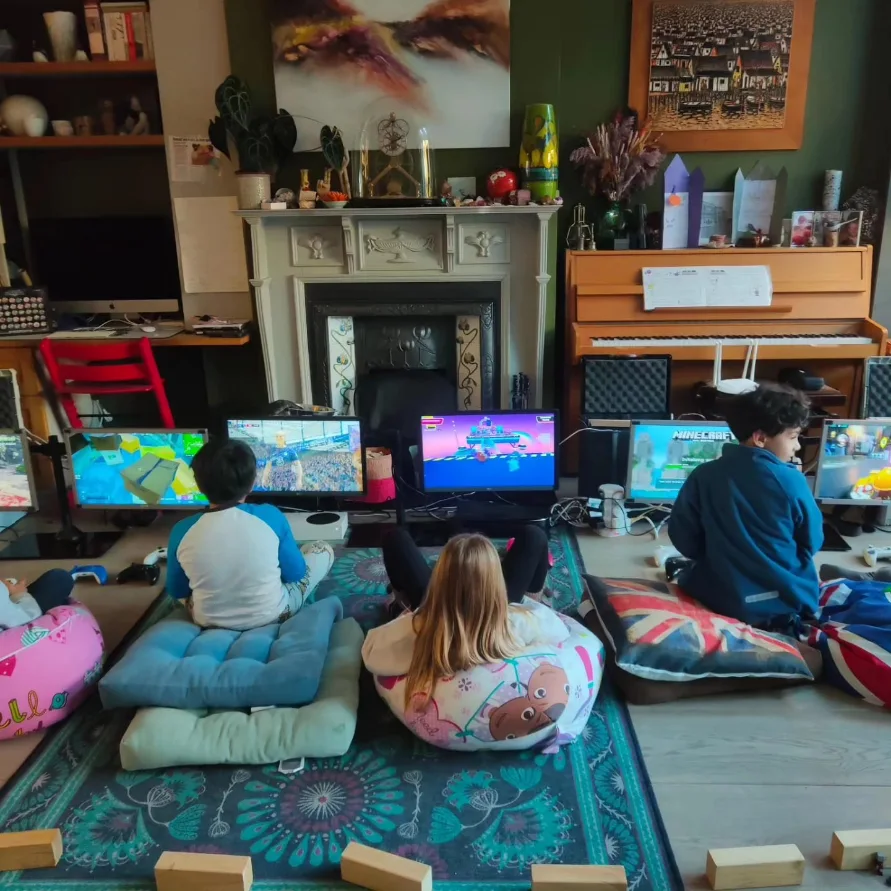
Choose a format that matches the guest numbers, divide the equipment into clearly explained stations and use short rounds or timed rotations. Mix competitive and cooperative activities, balance teams fairly and keep an easy-to-join option available for beginners.
First compare the capacity and equipment included with each gaming party package.
01
Choose the right group-gaming format
The best structure depends on the number of guests, available time and purpose of the event. A birthday can move between open play and a short competition, while a school, youth club or corporate session may benefit from planned rotations.
You can combine formats rather than using one throughout the event.
02
Give every station a clear purpose
Guests should understand what they can play, how many people can join and when a turn ends. Group equipment into recognisable experiences such as multiplayer consoles, racing, VR or retro gaming.
- Use games with quick setup and understandable objectives.
- Keep round lengths reasonably consistent between stations.
- Place the most popular activities where queues can be managed.
- Offer an approachable station for younger or less experienced guests.
- Explain which specialist equipment requires staff support.
Use the Games and Consoles Guide to select a balanced mix.
03
Use rotations to reduce waiting
Rotations work well when guest numbers exceed simultaneous playing capacity or when the organiser wants everyone to experience each activity. Divide guests into manageable groups and announce each change clearly.
Use group names, colours or numbers, then move every group in the same direction. A simple rotation is easier to manage than a different schedule for every station.
- Allow enough time to understand and play each activity.
- Include a short changeover between rounds.
- Avoid moving guests midway through an unfinished match.
- Keep one person responsible for announcing changes.
- Build spare time into the final round.
04
Balance teams without making it complicated
Do not allow all confident players to collect on one side. Spread experience, ages and friendship groups where practical, while avoiding arrangements that make nervous guests feel singled out.
- Use small teams so every member has a meaningful role.
- Change pairings between rounds if the first match is one-sided.
- Mix individual and team scores rather than rewarding only one skill.
- Let teams choose names to create identity quickly.
- Include cooperative games where the group succeeds together.
For younger groups, review the advice in the Gaming Safety Guide before deciding the format.
05
Run a tournament that keeps people involved
A tournament should add excitement without leaving eliminated players with nothing to do. Use short matches, show the format before starting and keep other gaming stations open where possible.
Round-robin groups, consolation matches or team points allow more participation than a strict knockout in which half the guests stop after one game.
- Choose a game with predictable round lengths.
- Explain controls and rules before scoring begins.
- Decide how draws and disputes will be resolved.
- Track results somewhere visible and easy to understand.
- Recognise teamwork or improvement as well as the winner.
06
Make mixed-ability participation feel natural
Not every guest arrives with the same confidence, mobility or interest. Provide alternatives and allow observation, practice or team participation without making those choices feel like a lesser experience.
- Start with a practice round before recording scores.
- Use simple games alongside more technical challenges.
- Pair helpful experienced players with beginners.
- Allow guests to change station if an activity is unsuitable.
- Ask the organiser about relevant accessibility or sensory needs.
Schools and community organisers can also explore our school gaming events and youth club gaming events.
07
Complete the group-gaming checklist
- Guest numbers and simultaneous capacity compared
- Open play, rotations or tournament format selected
- Stations and round lengths explained
- Groups or teams balanced
- Beginner-friendly options included
- Results and tie-break rules agreed
- Alternative activity available between rounds
- Final changeover and finish time planned
For venue access, timings and setup preparation, continue with the Party Planning Guide. More booking answers are available in the Gaming Party FAQ.